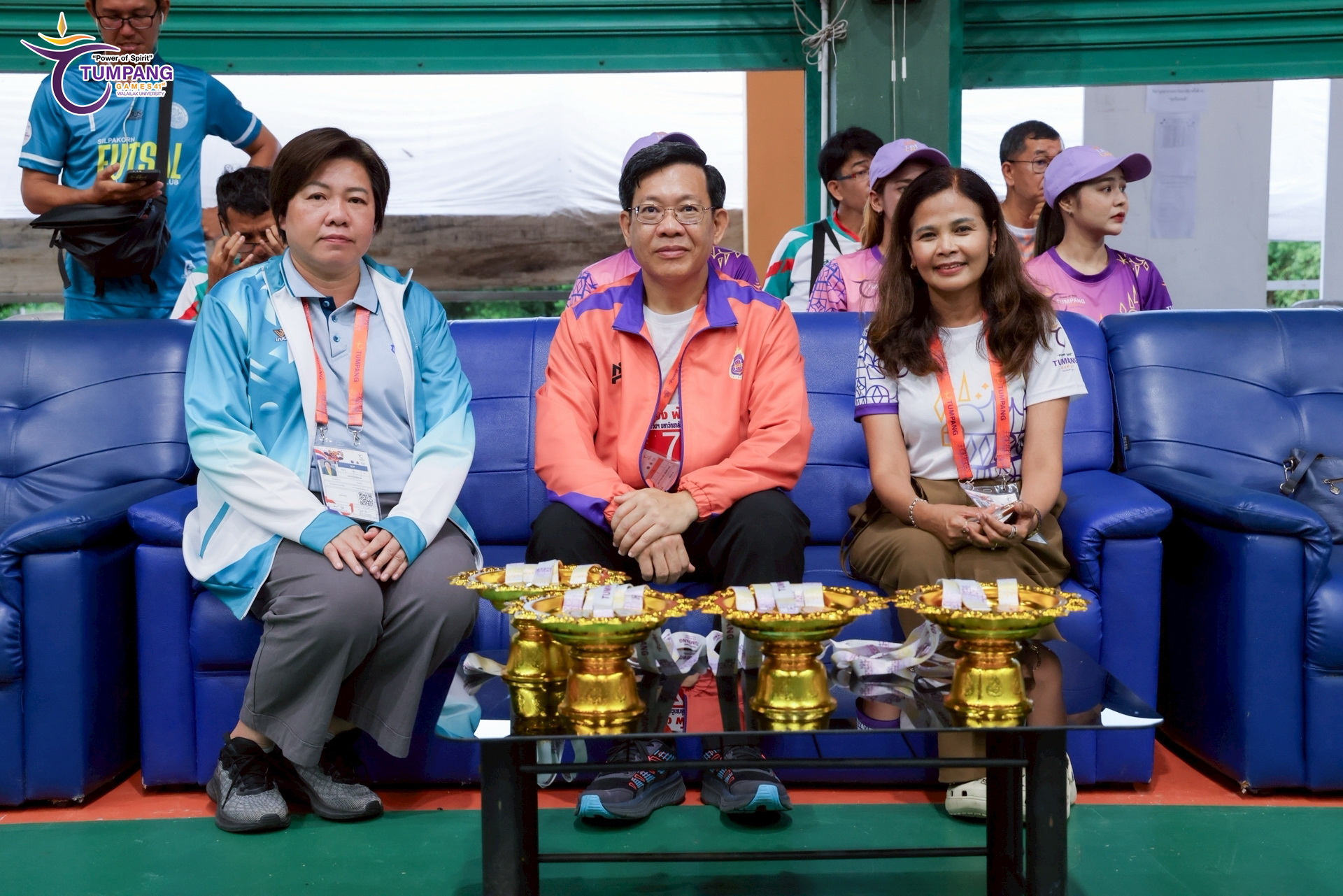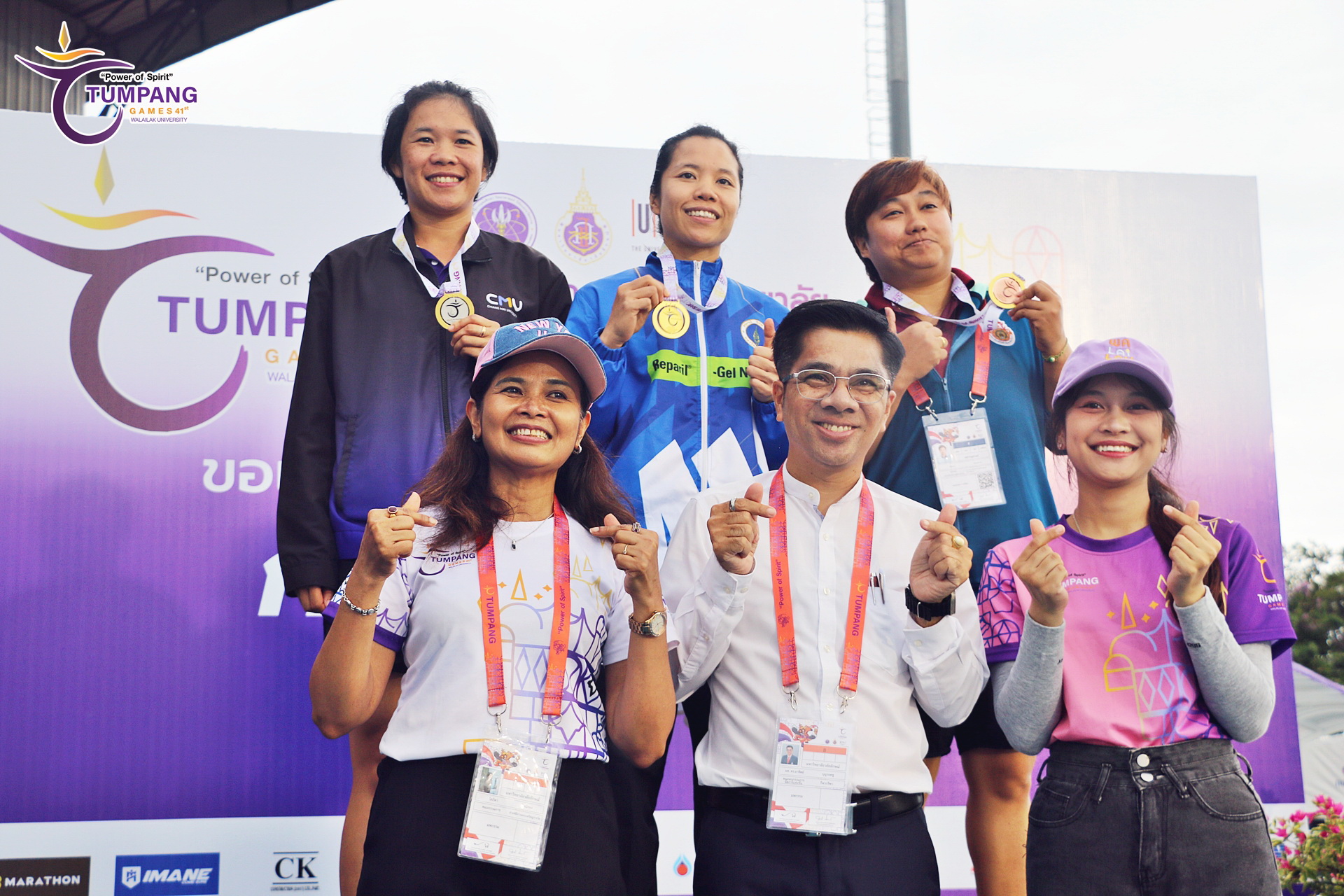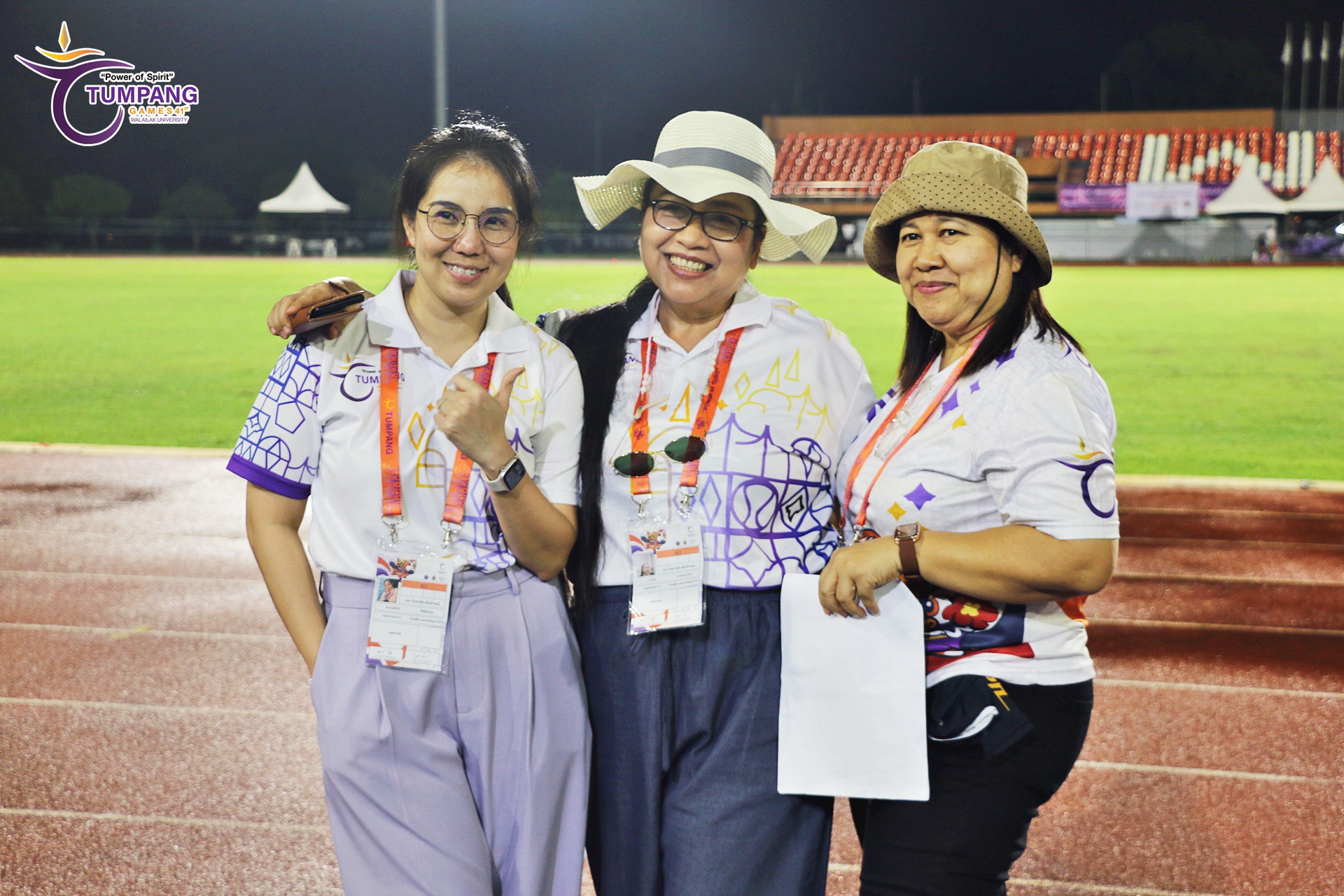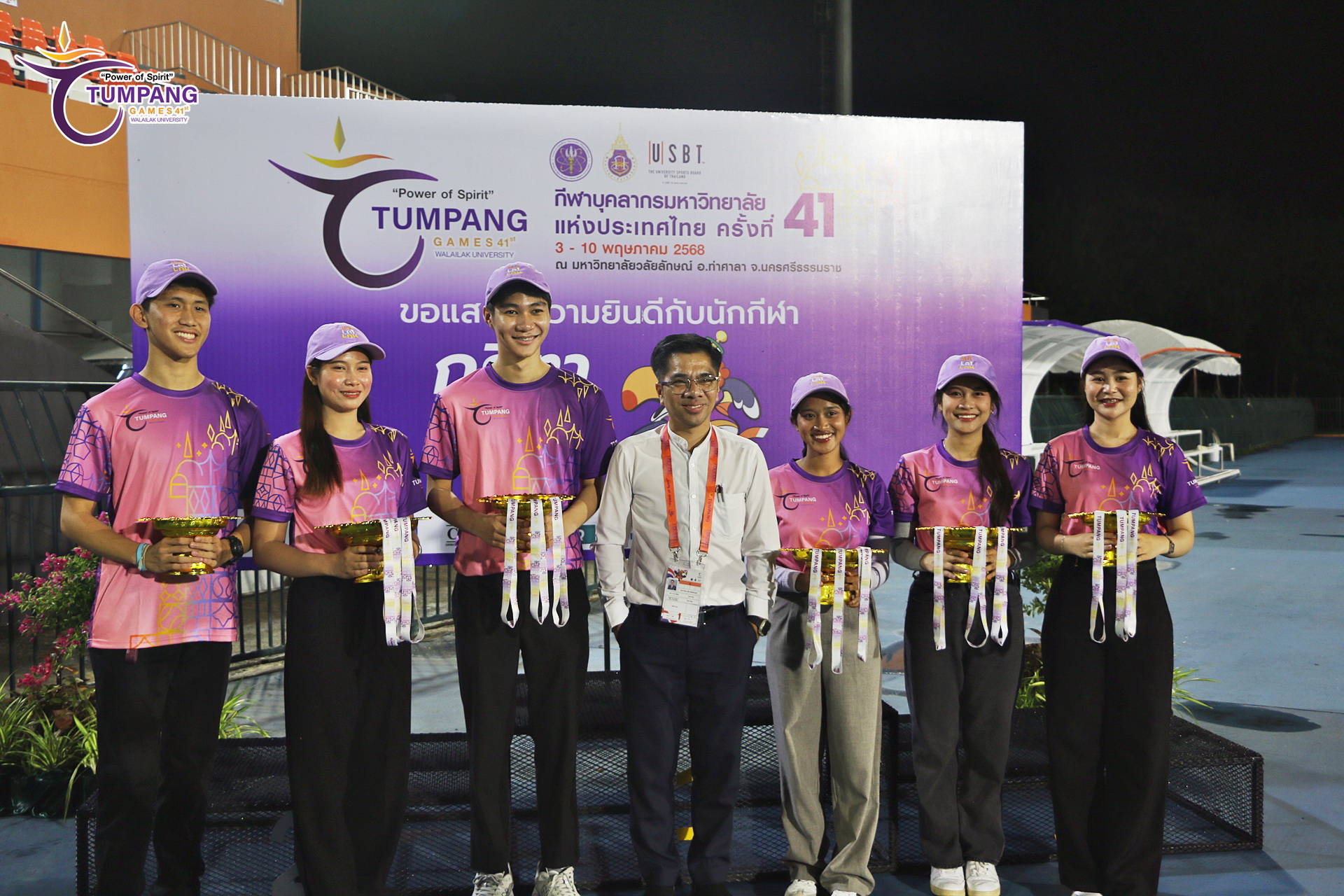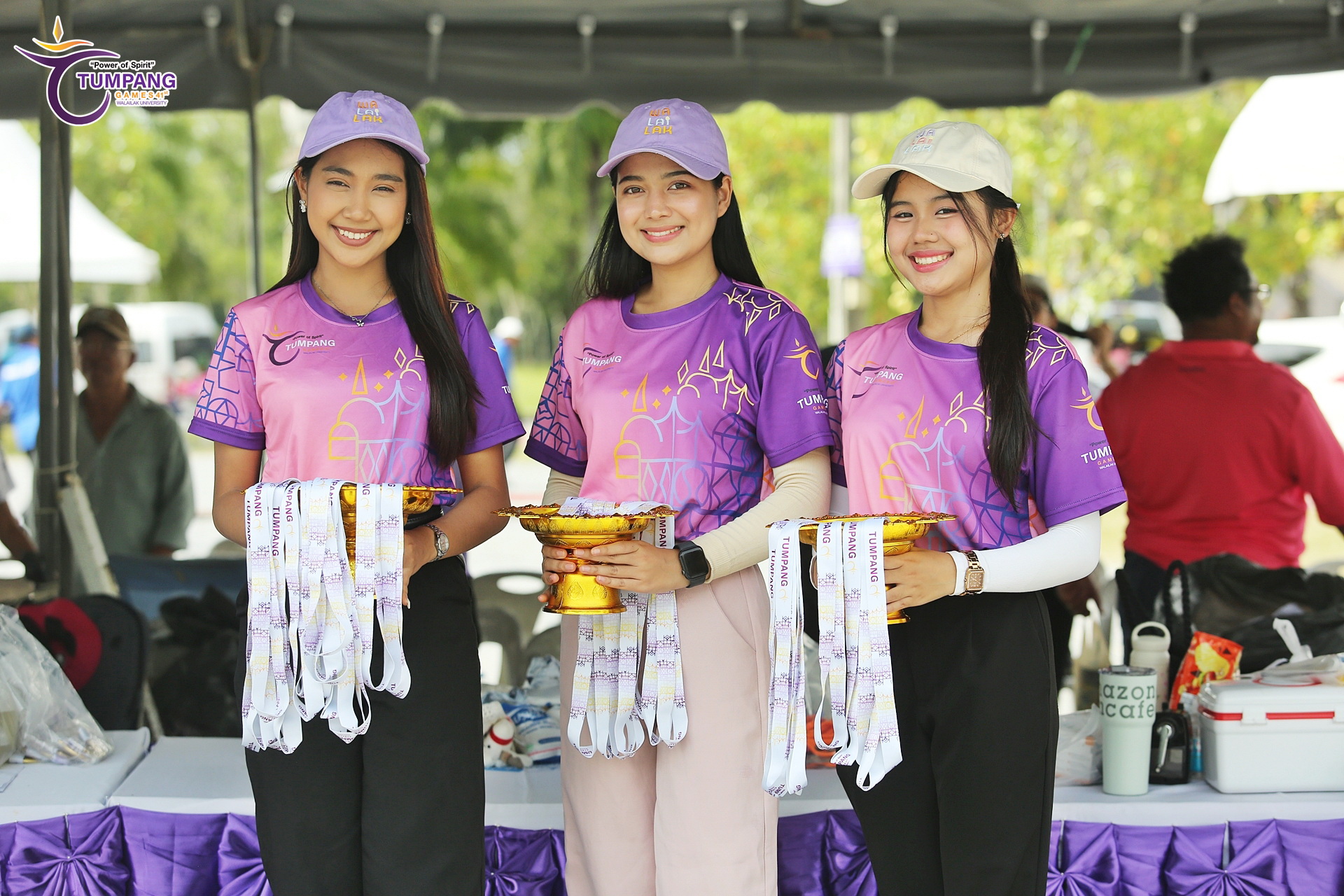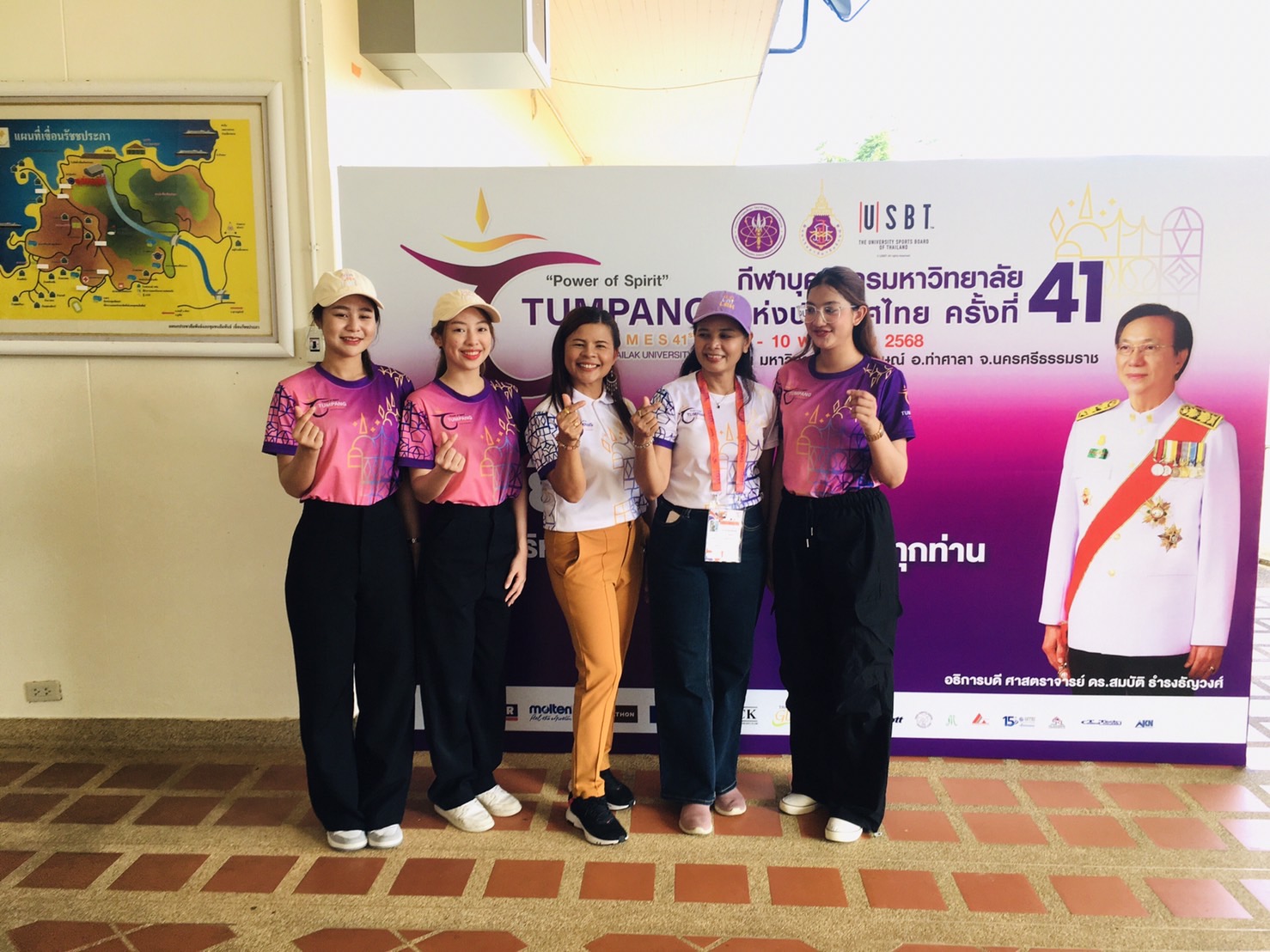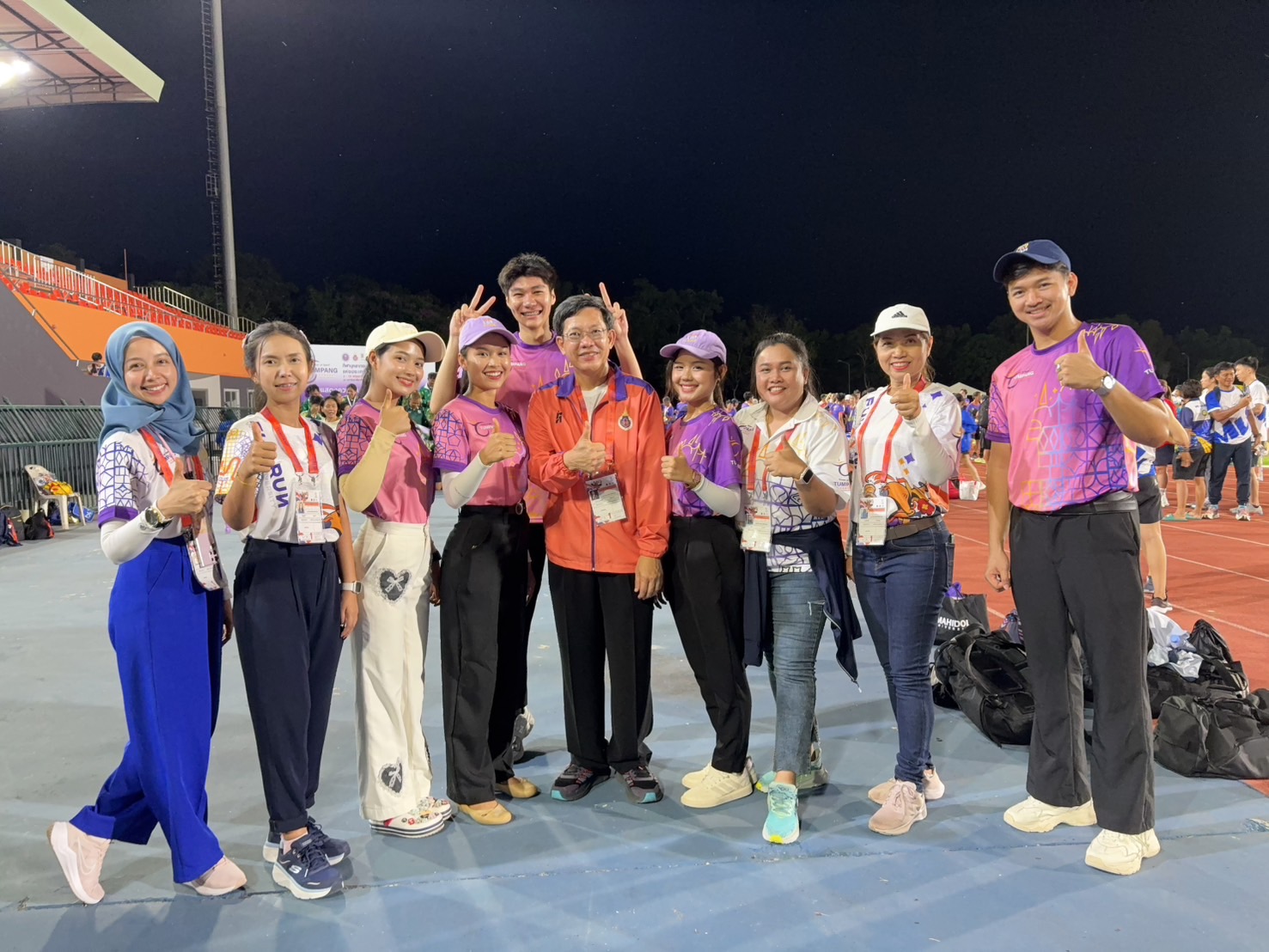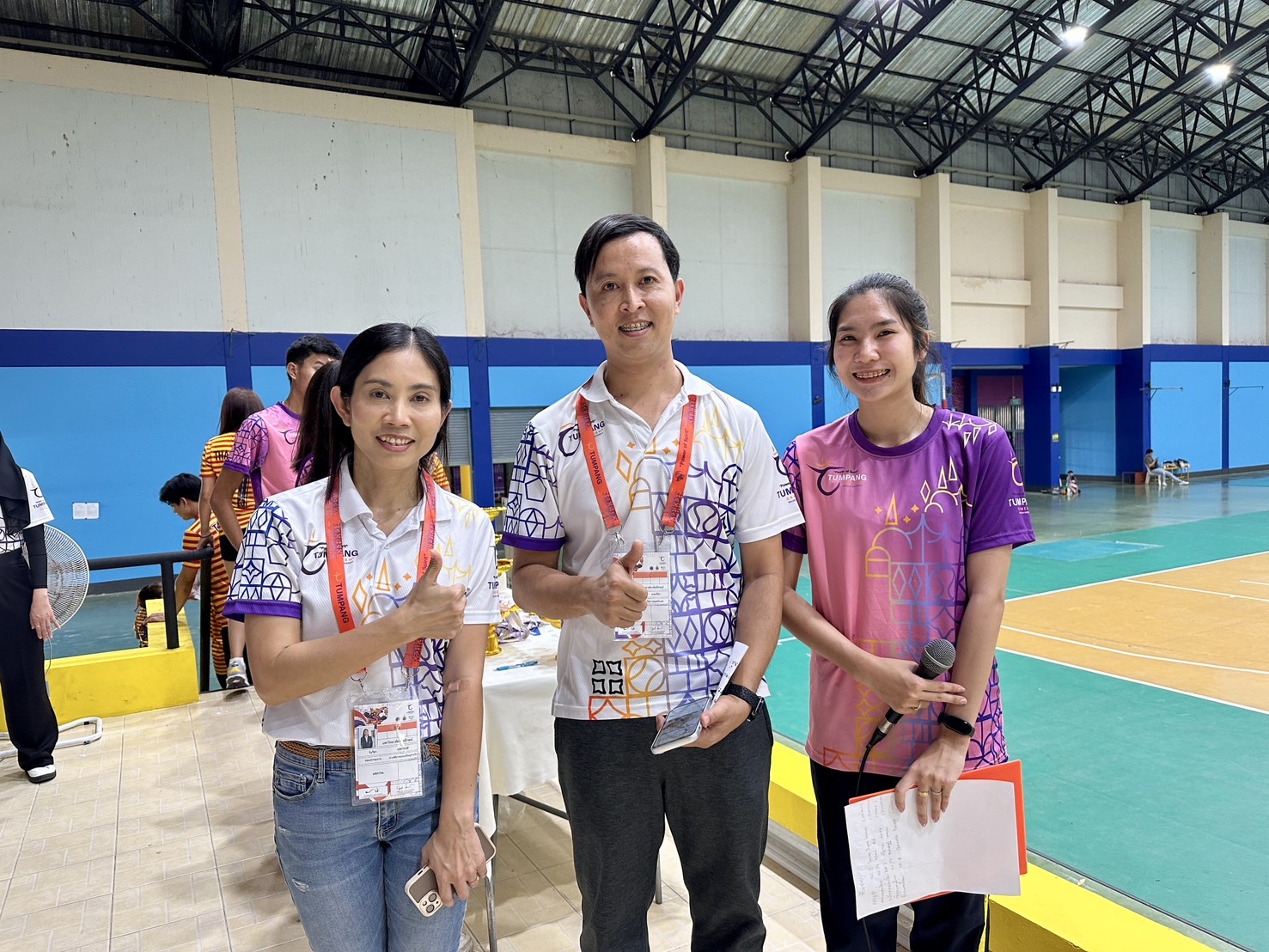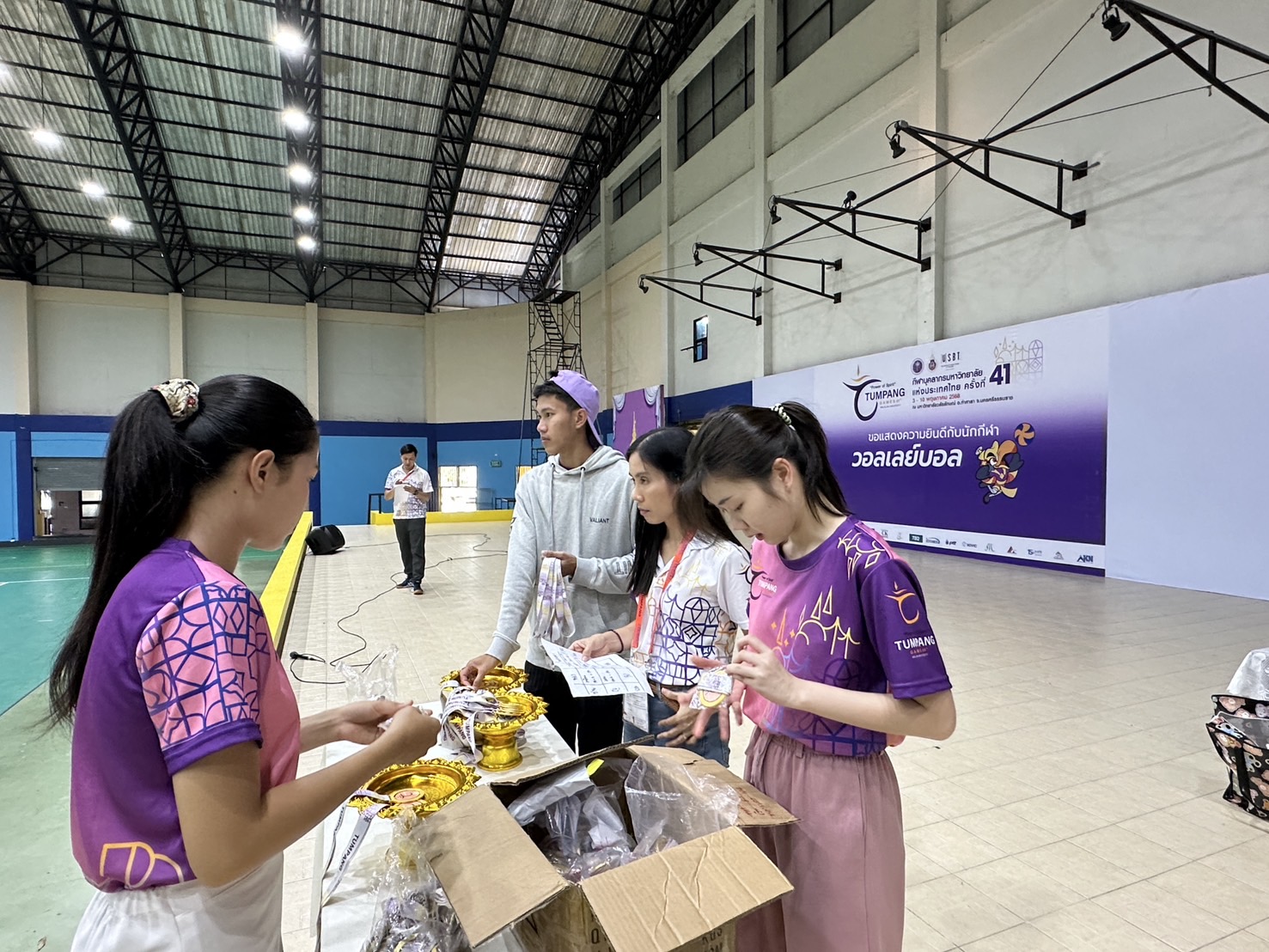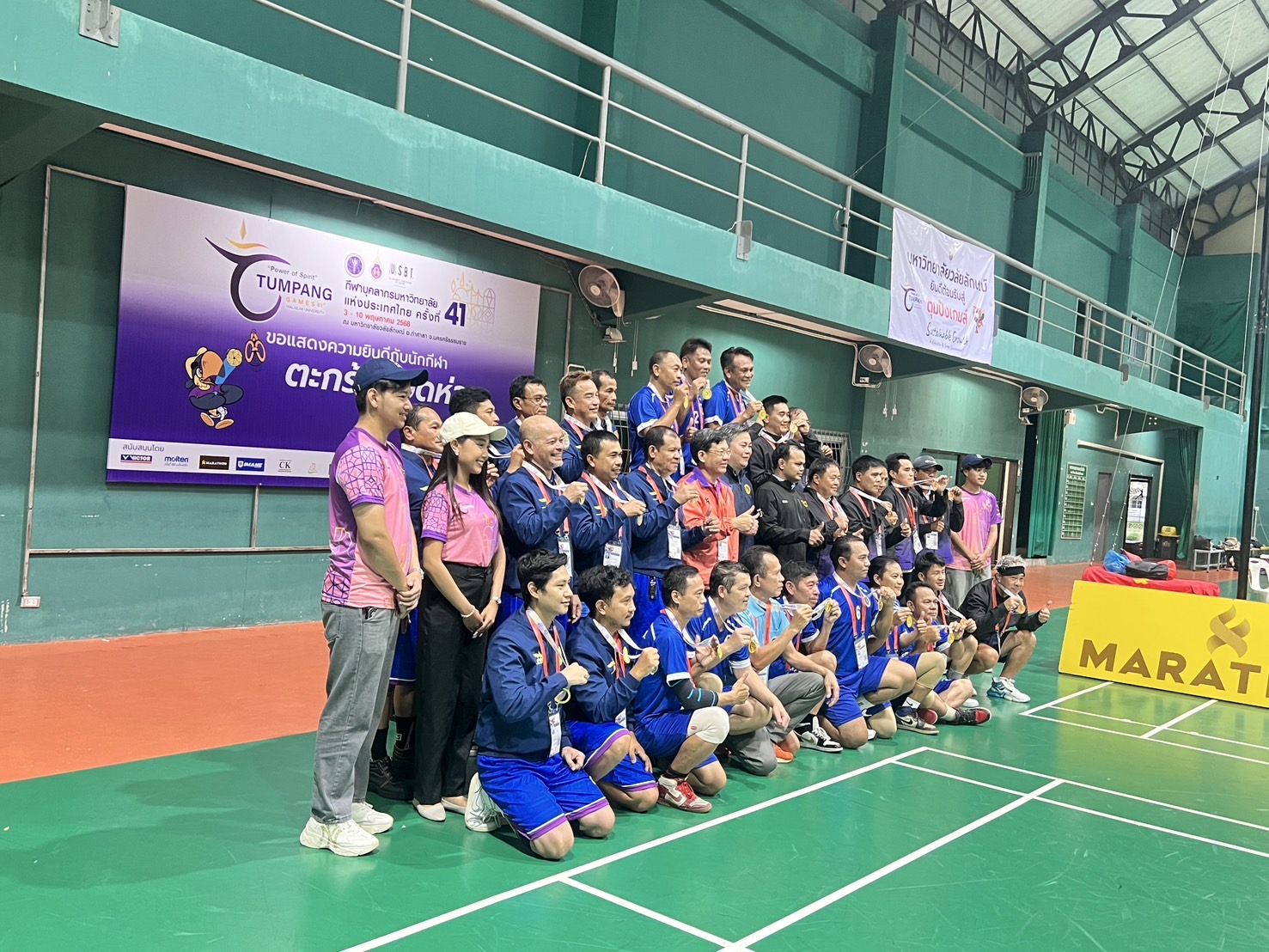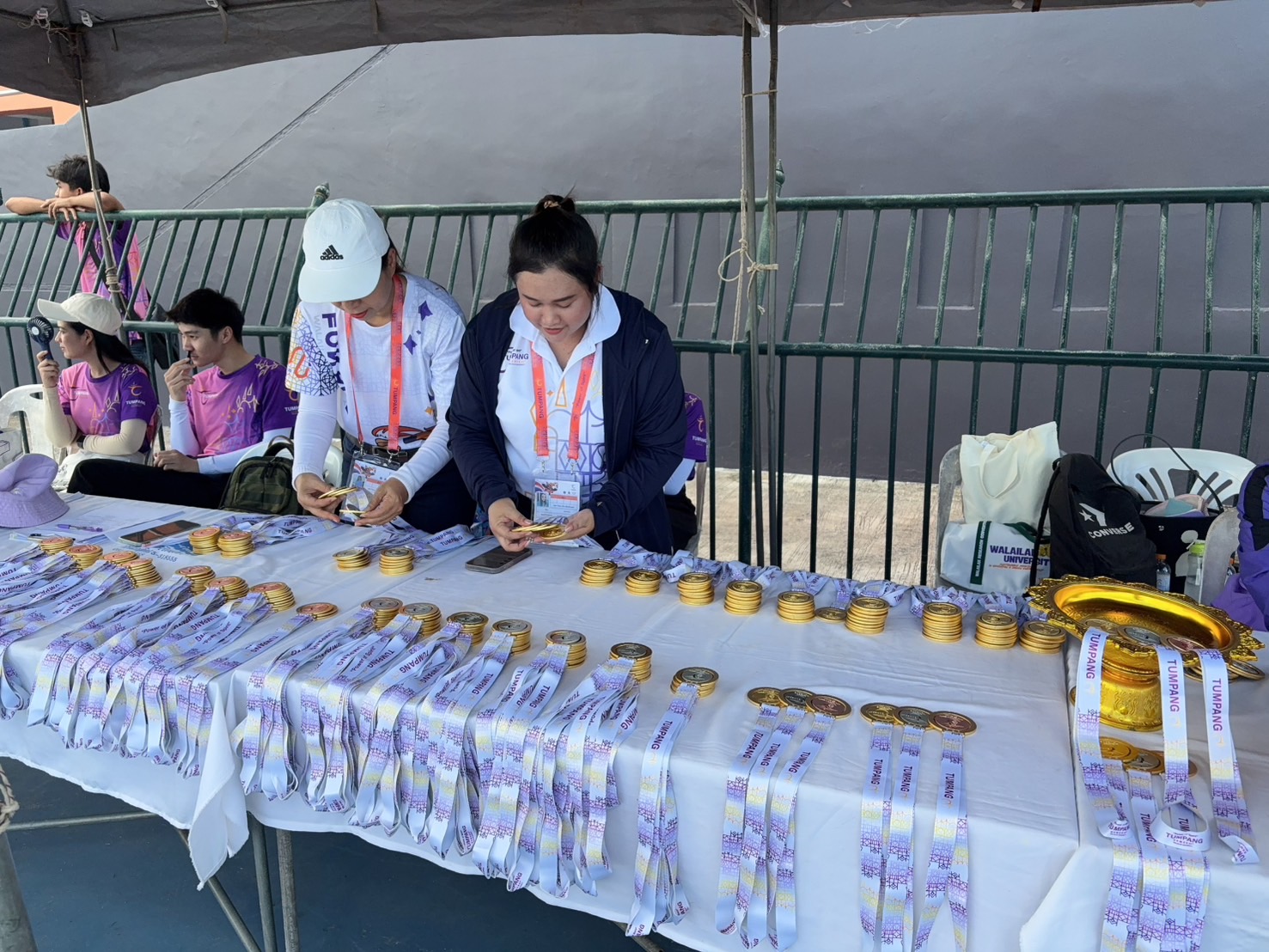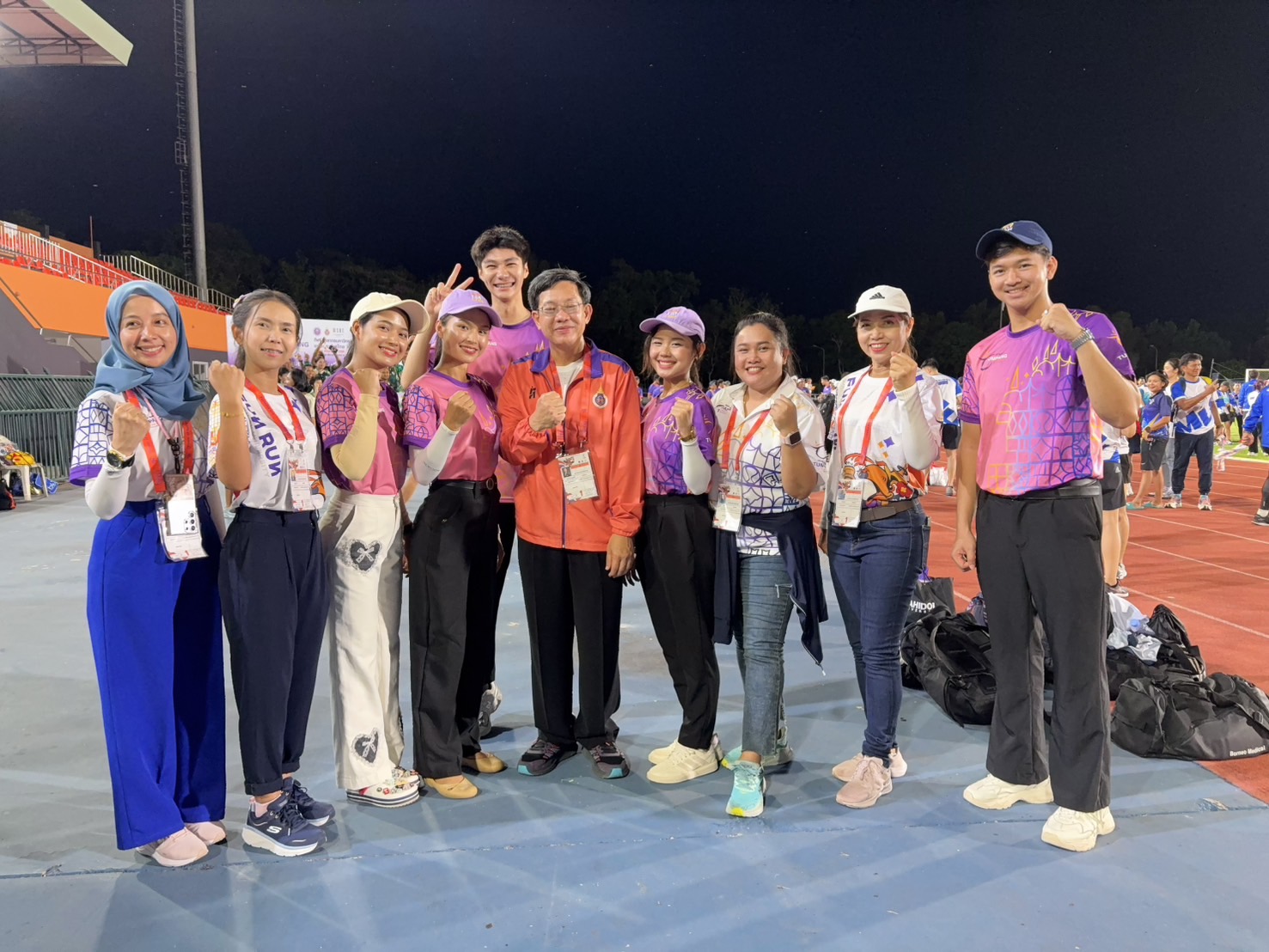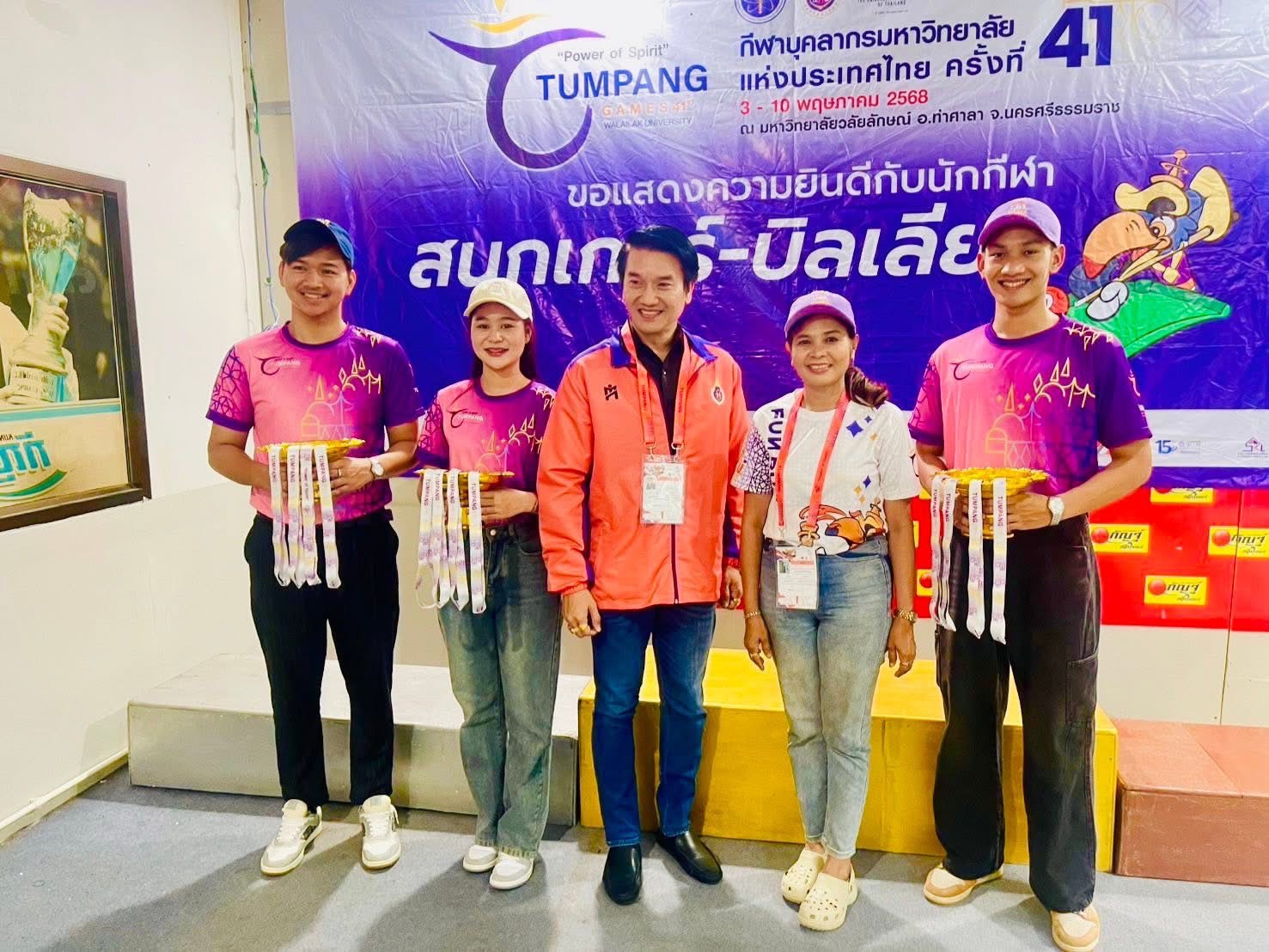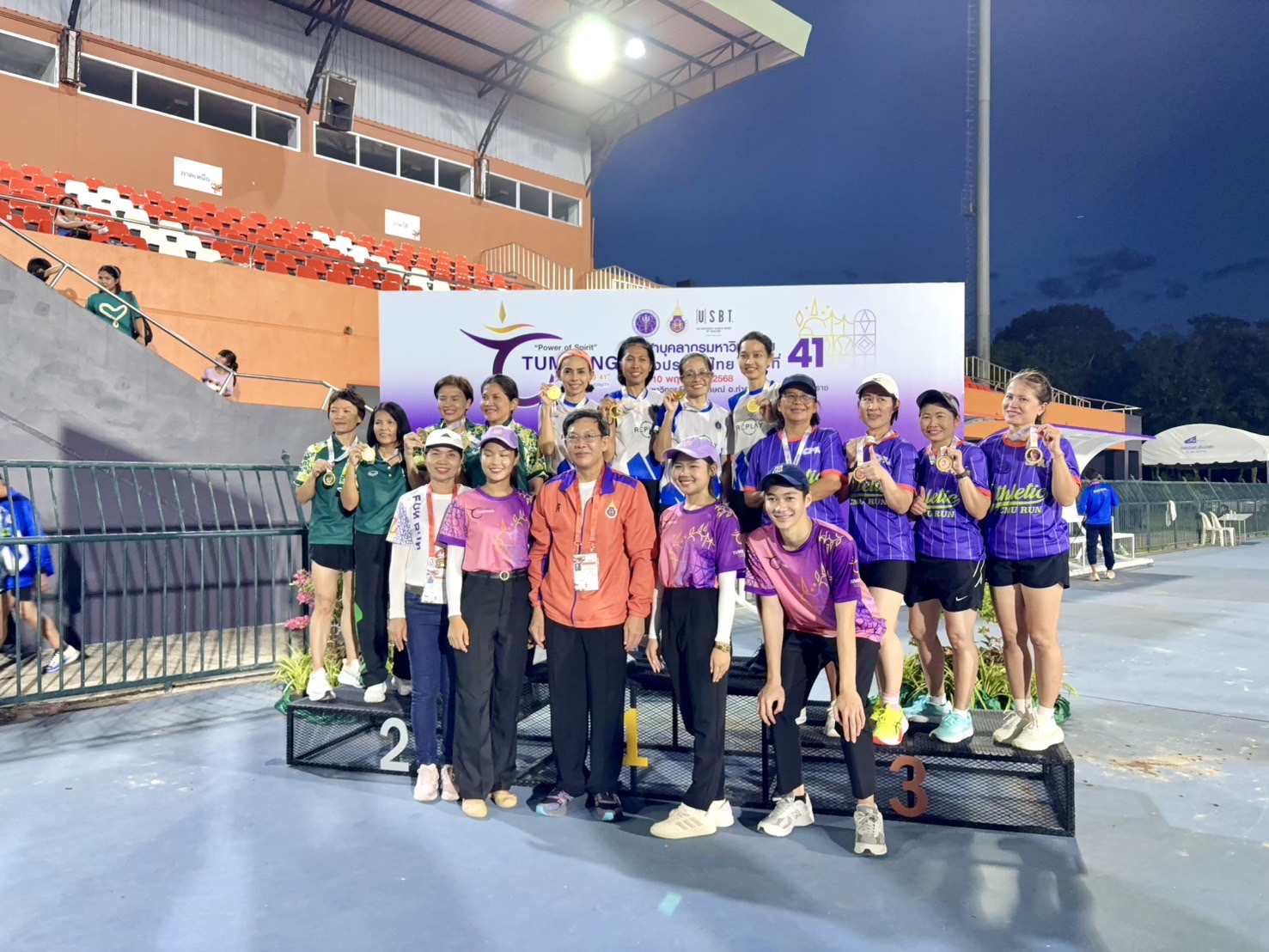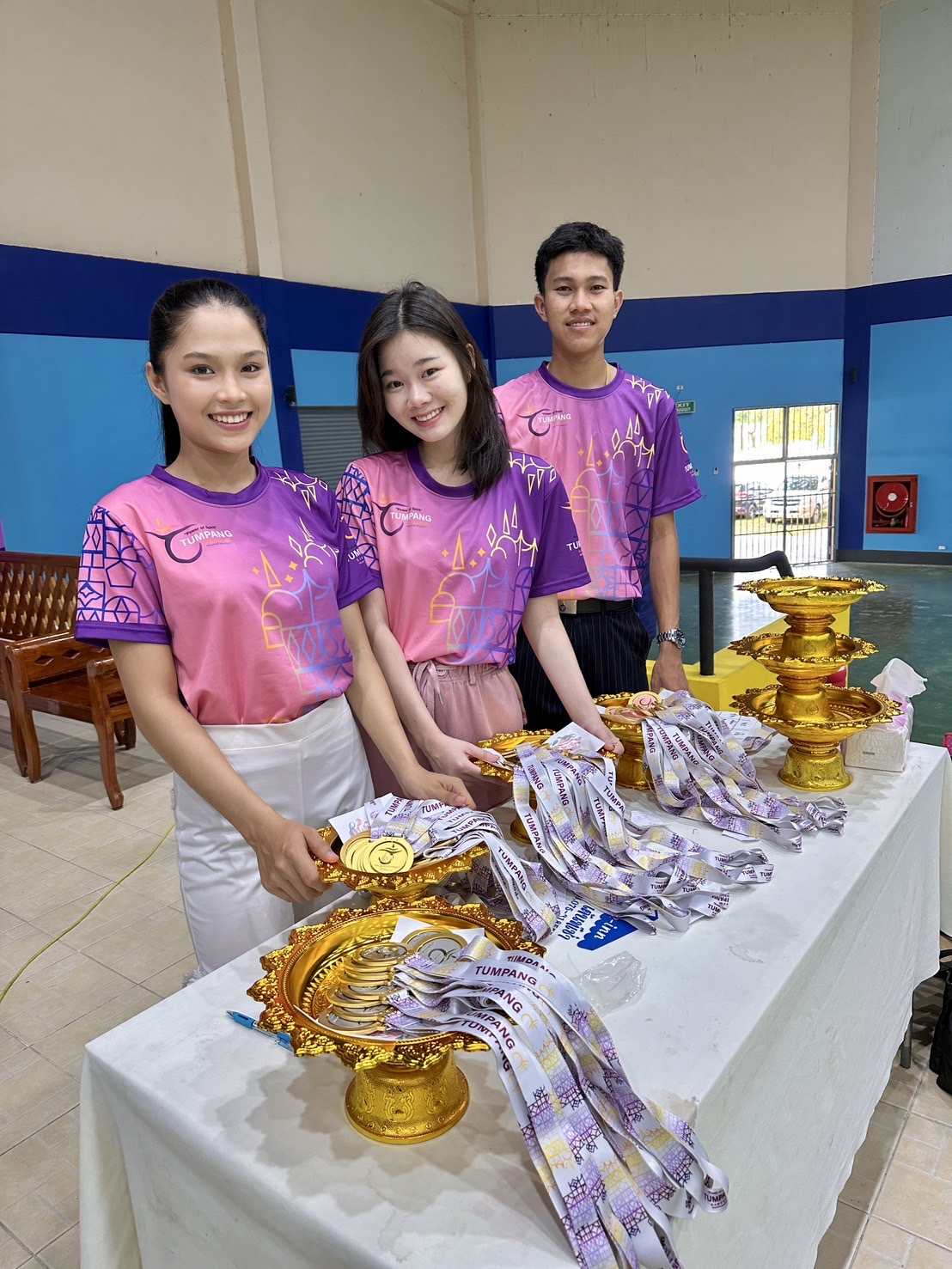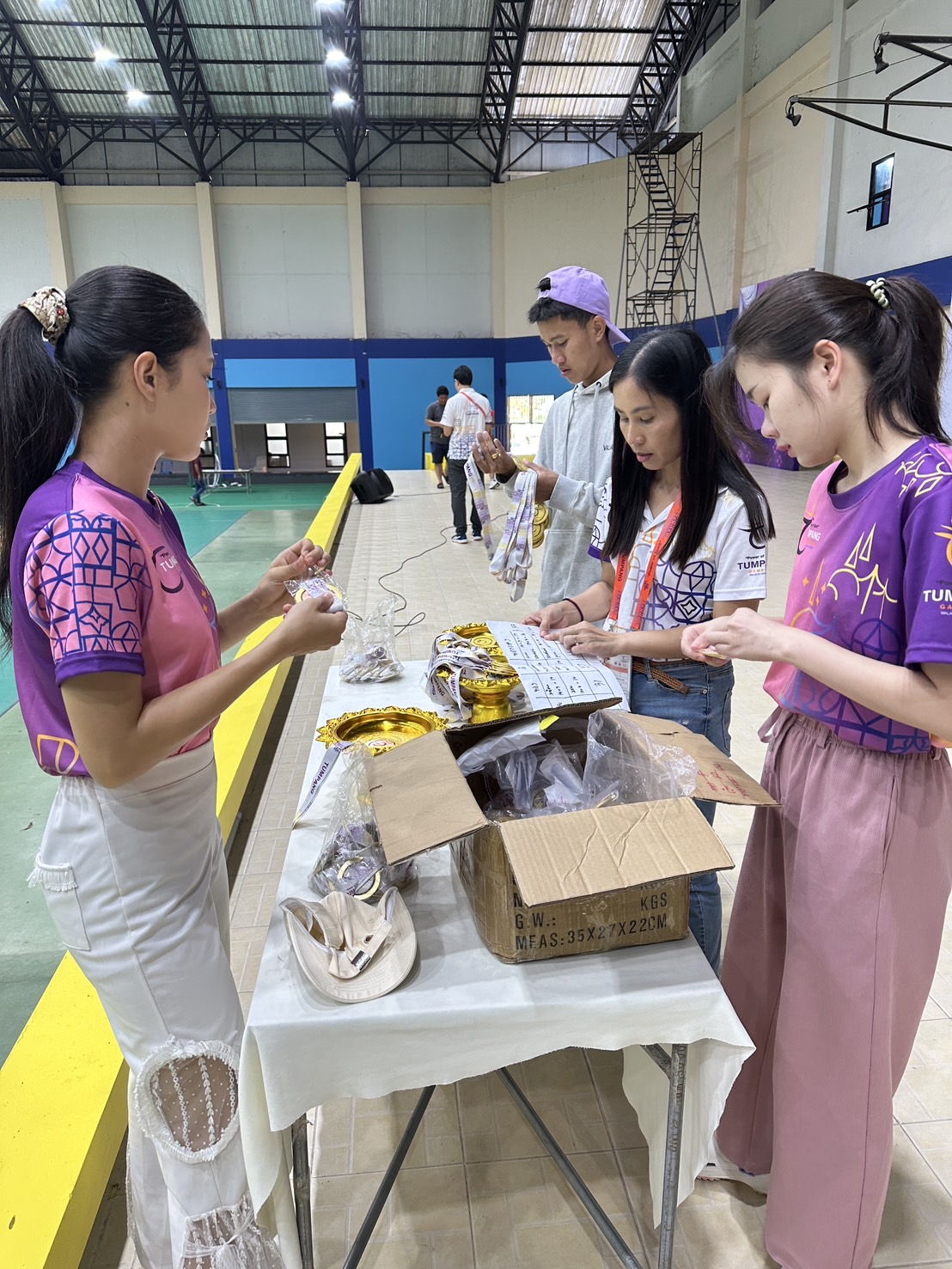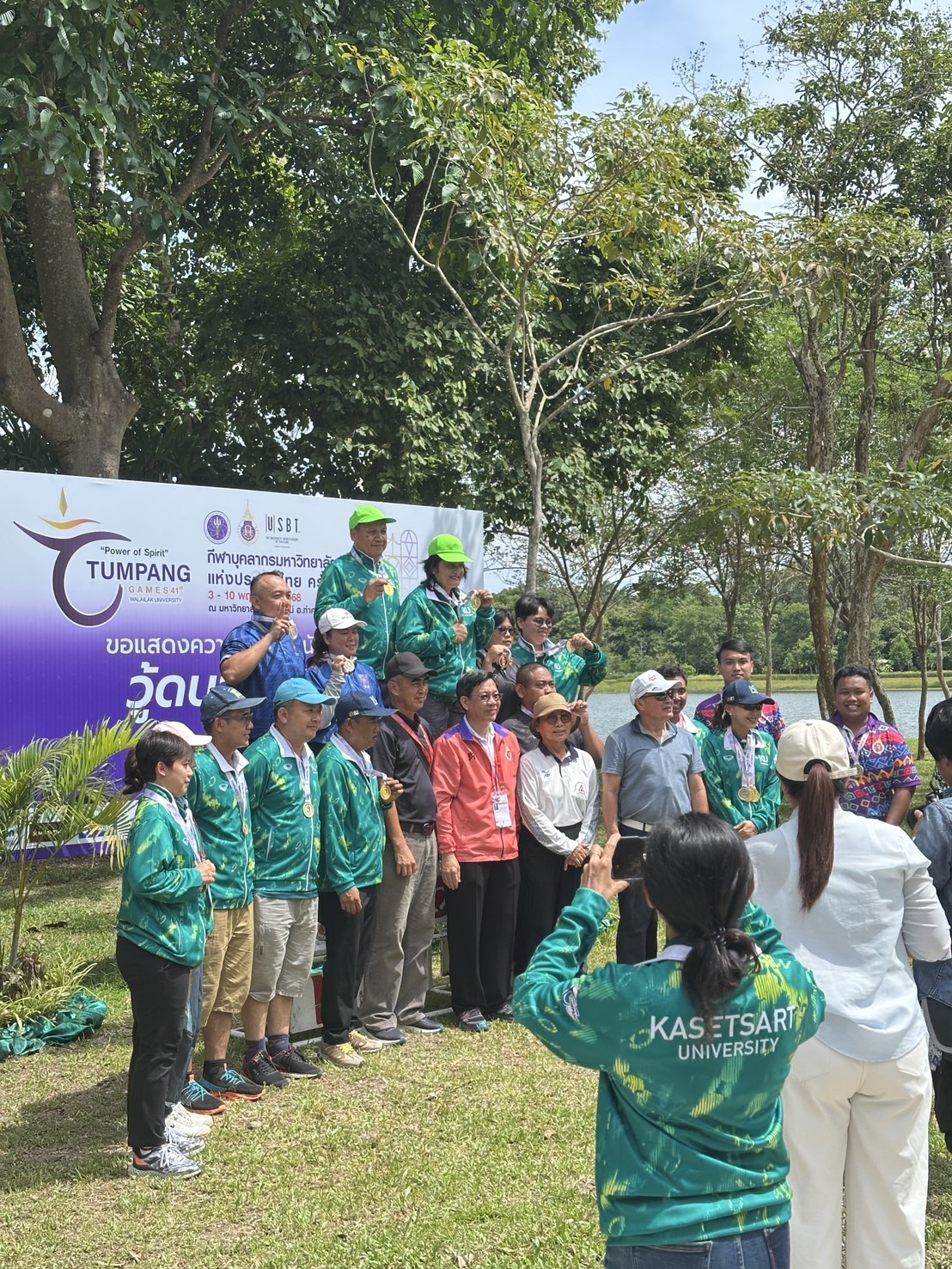
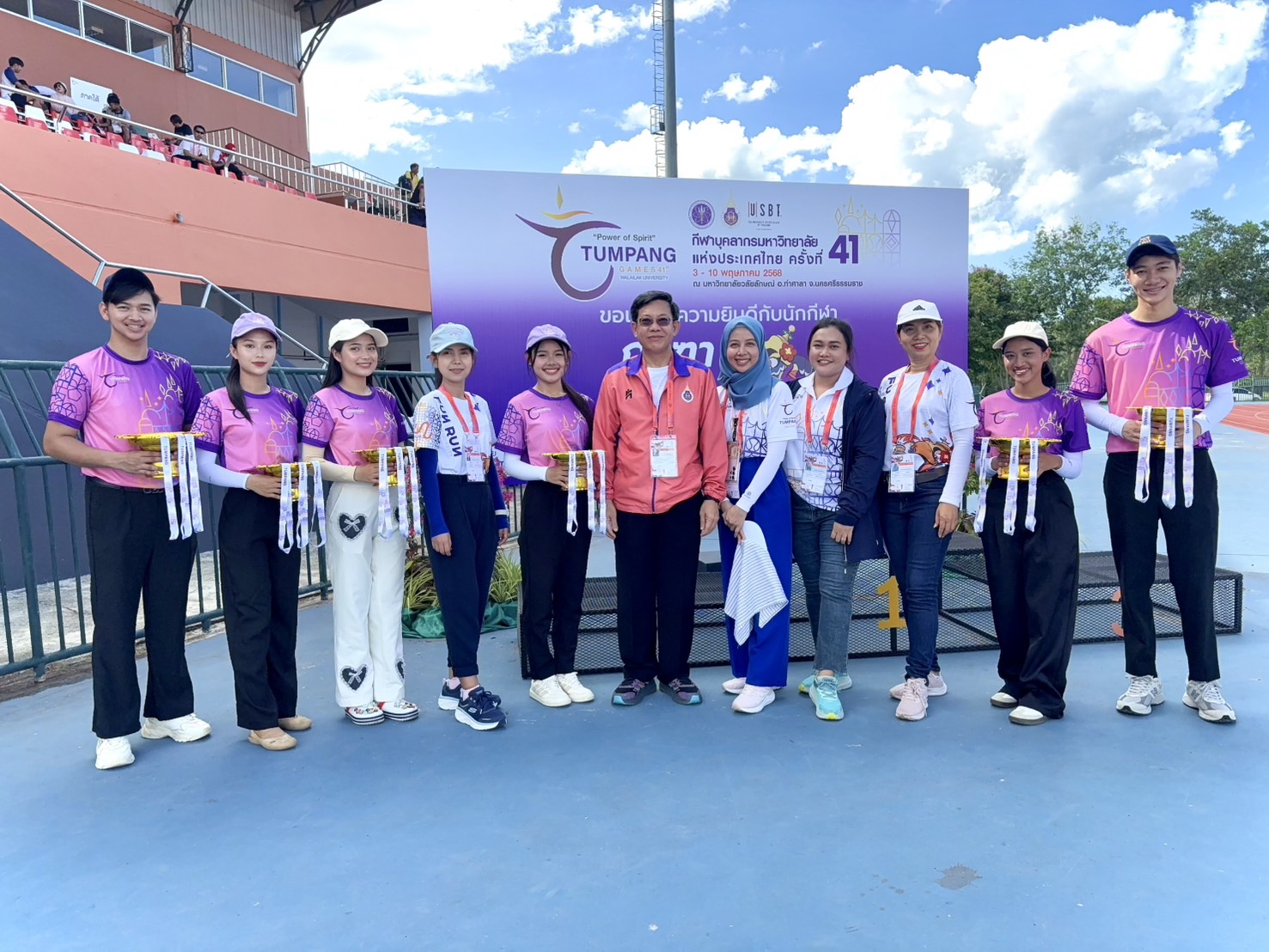
The Administration and Secretariat staff served as the Medal Ceremony Department for the “Tumpang Games” Personnel Sports Competition, with Vice President Asst. Prof. Dr. Padungsak Sooksaard as the Head of the Department, from May 3-10, 2025, at Walailak University.
The Thailand University Personnel Sports Competition, or “Tumpang Games,” stands as a significant annual sports festival that offers faculty and staff from higher education institutions across the country an opportunity to compete, showcase their athletic abilities, and simultaneously strengthen good relations and exchange experiences. In 2025, Walailak University in Nakhon Si Thammarat province had the honor of hosting the competition from May 3rd to 10th, amidst an atmosphere of enthusiasm and friendship.
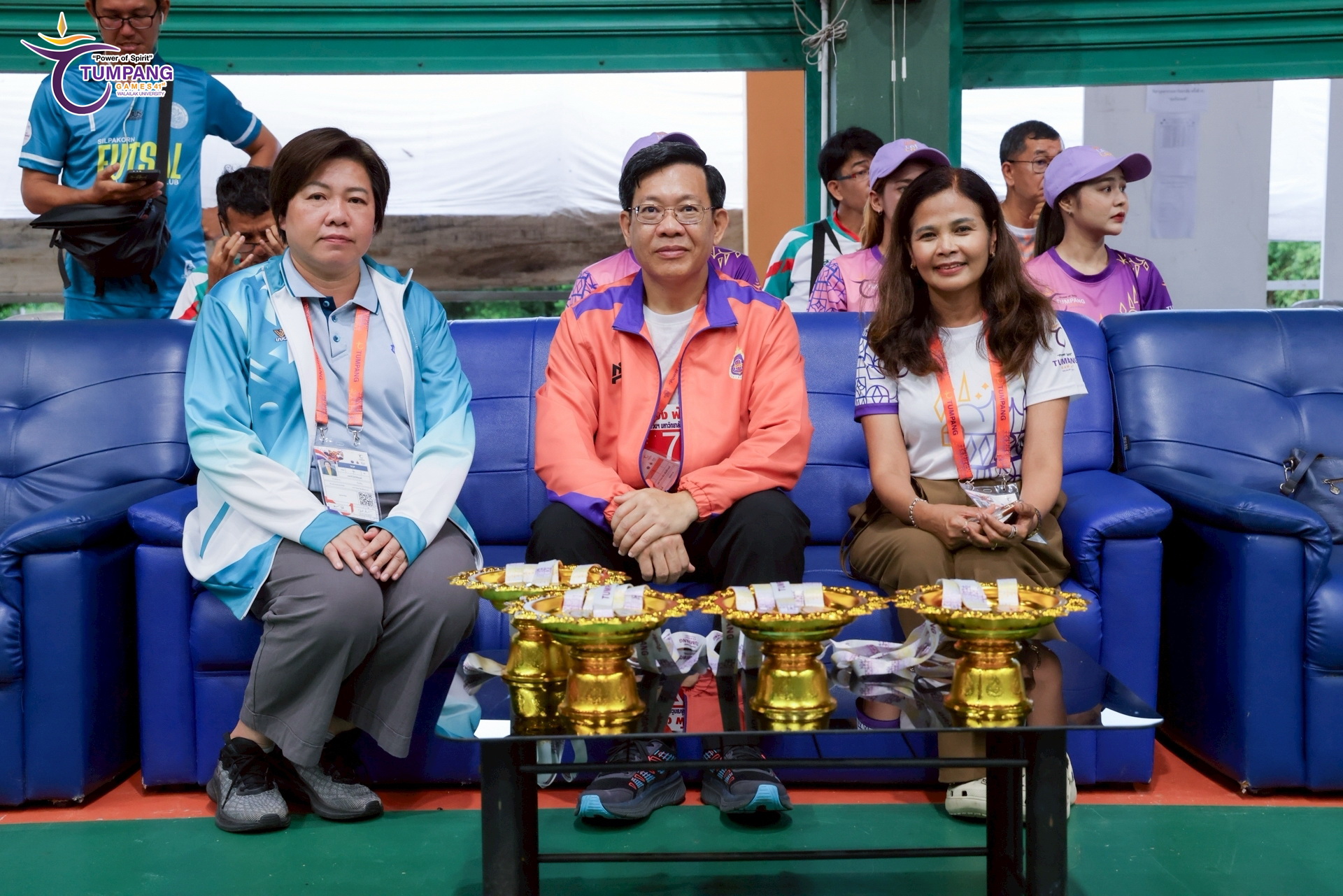
Throughout the 10-day period of the competition, Walailak University transformed its premises and facilities to accommodate athletes and officials from over 59 institutions nationwide who traveled to compete in 17 diverse sports. These included popular international sports as well as some traditional Thai games. The atmosphere in the competition venues was filled with the determination of the personnel athletes, who, in addition to dedicating themselves to their official duties, also allocated time to train and participate in the competition with a full sportsmanship spirit. Cheers from colleagues from the same institution echoed loudly, constantly providing encouragement to the athletes on the field.
One of the key teams vital to the success and smooth running of the competition was the Medal Ceremony Department, which was assigned as a primary responsibility to the Administration and Secretariat staff of Walailak University. Under the leadership of Vice President, Assistant Professor Dr. Padungsak Sooksaard, as the Head of the Department, this team played a crucial role in managing the medal ceremonies to be honorable, orderly, and impressive for every athlete who stepped up to receive their medal of pride. The preparation for this part was meticulous, ranging from preparing the medals and podiums to coordinating with relevant parties to ensure the ceremony proceeded smoothly. This demonstrated the capability and dedication of the host university’s Administration and Secretariat staff, who worked diligently to make “Tumpang Games 2025” a memorable event.
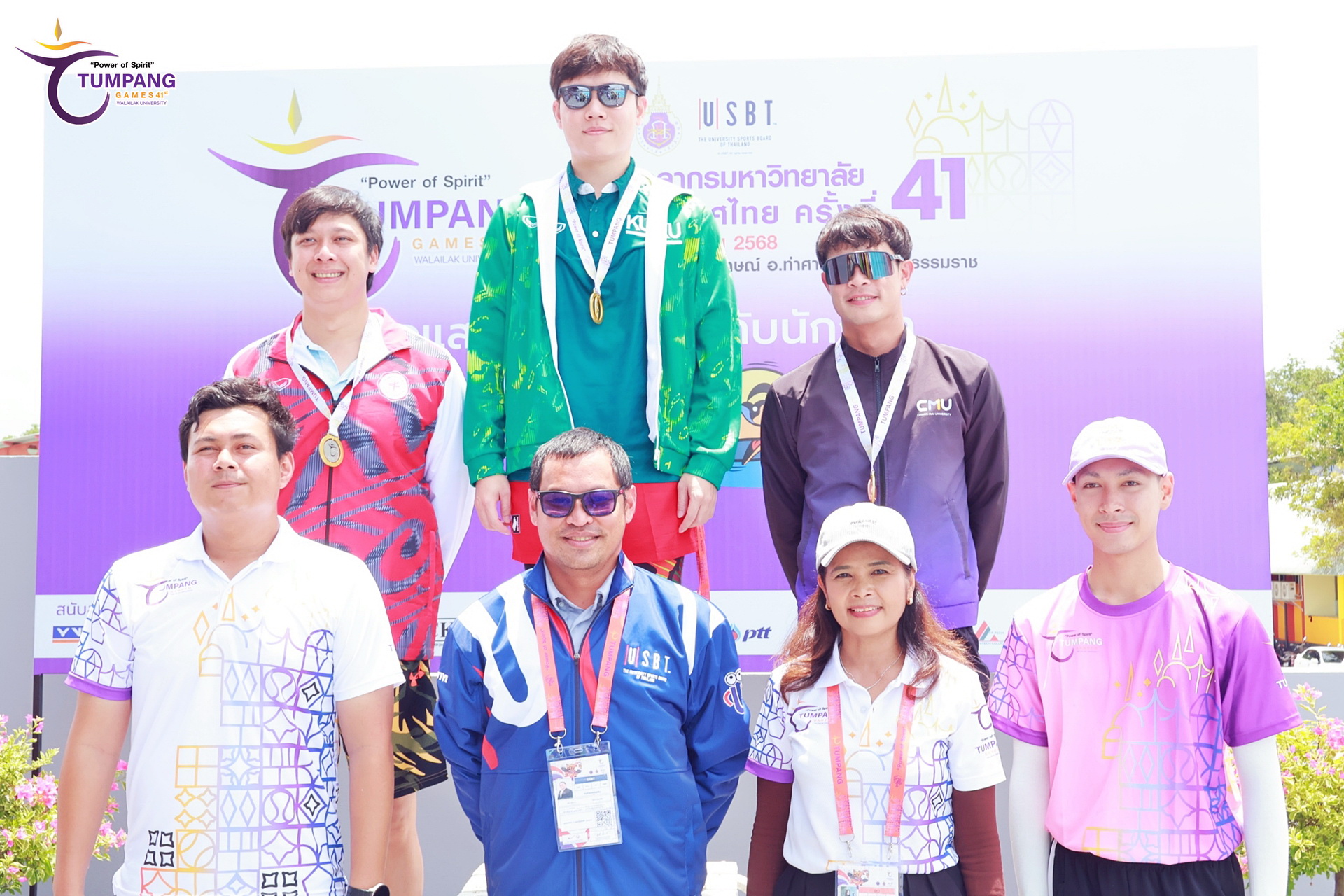
The competition results reflect the capabilities and athletic potential of personnel from various institutions, particularly Mahidol University, which continued to maintain its excellent standard in personnel sports. Mahidol successfully claimed the “Tumpang Games” overall gold medal champion title for another consecutive year with impressive results, sweeping a total of 108 gold, 83 silver, and 71 bronze medals, totaling 262 medals. This put them well ahead of the second-place winner, Chiang Mai University, which secured 49 gold, 48 silver, and 57 bronze medals (totaling 154 medals), and the third-place winner, Khon Kaen University, which won 40 gold, 22 silver, and 33 bronze medals (totaling 95 medals). Mahidol University’s success this time underscores the strength and dedication in developing personnel sports within the institution.
Beyond the competition results that brought joy to the medalists, the core essence of the “Tumpang Games” personnel sports competition remains its role as a platform for fostering unity and building good relations among personnel from universities across the country. Participating together in activities, whether as athletes, coaches, or spectators, is a crucial part of creating an atmosphere of friendship, mutual learning, and building valuable networks. Ultimately, these connections will lead to cooperation and development in other aspects of the Thai higher education sector.
Therefore, the Thailand University Personnel Sports Competition “Tumpang Games 2025” at Walailak University was not merely a sports competition aiming for excellence but also a convergence of energy, determination, and friendship among the Thai higher education community. It reflects the importance of maintaining good health alongside work and building good relationships among colleagues, which are fundamental foundations for driving institutions towards sustainable success in all dimensions.